Which AI Components Are Copyright Protectable And Which Are Not?
The potential of artificial intelligence (“AI”) systems to generate a wide range of outputs with little or no human input raises fundamental concerns for copyright law, which has traditionally been based on the protection of human inventiveness and originality. AI is a type of technology that can learn from data and make good decisions and judgements on its own, rather than processing data at the request of human operators. The protectability of AI’s outputs is becoming increasingly important due to the rapid increase in the complexity of tasks AI can master.
Despite the fact that more breakthroughs are expected, courts around the world are still hesitant (and in some cases outright opposed) to accepting AI as a “author” in its own right. As a result, it’s critical for firms in this field to use traditional methods to protect the underlying software, algorithms, and components that run their AI.
The US Copyright Office’s Review Board refused a second request for reconsideration of a rejection to register artwork made by AI on February 14, 2022. Importantly, the application for registration indicated that the artwork was created “autonomously” by “a computer algorithm running on a machine.” The applicant did not assert that the work was created with any contribution from a human author.
The decision addresses and dismisses the topic of whether AI may be considered an author for the purposes of copyright. However, the judgement ignores the question of whether and to what extent AI involvement in the creativity process renders the outcome unprotectable under copyright law.
The Review Board’s decision was not all that surprising. In the United States, the Copyright Act protects “original works of authorship” that are fixed in a tangible medium of expression. 17 U.S.C. § 102(a). In non-AI circumstances, case law and discussion on the authorship question have long argued that a human is essential for copyright protection. (e.g., Burrow-Giles Lithographic Co. v. Sarony, 111 U.S. 53, 57-59 (1884) (holding that an author is “he to whom anything owes its origin; originator; maker; one who completes a work of science or literature”; describing a copyright as “the exclusive right of a man to the production of his own genius or intellect”); Urantia Found. v. Kristen Maaherra, 114 F.3d 955, 957-59 (9th Cir. 1997) (holding that a book containing the words “‘authored’ by non-human spiritual beings” can only gain copyright protection if there is “human selection and arrangement of the revelations”); Naruto v. Slater, 888 F.3d 418, 426 (9th Cir. 2018) (affirming dismissal of copyright claims brought by a monkey over selfies he took on a photographer’s unattended camera; noting that the Copyright Act refers to an author’s “children,” “widow,” “grandchildren,” and “widower,”—terms that “all imply humanity and necessarily exclude animals”)
The Situation in France, Germany, and the UK
In France, Germany, and the United Kingdom, courts have never recognized anyone other than a natural person as the author of a copyrighted work. The finding that AI cannot be an author for copyright purposes does not mean that AI-assisted outputs are void of any copyright protection.
Works created by a human using software on a computer (e.g., Microsoft Word or Adobe Photoshop) are arguably protectable under copyright law. In its decision, the Review Board was careful to note that “the Board does not need to determine under what circumstances human involvement in the creation of machine-generated works would meet the statutory criteria for copyright protection.” Feb. 14 Decision, at 3 n.3.
Copyright protection may be granted to wholly computer-generated works under English law. It establishes a separate category for works generated “under conditions in which there is no human author of the work” and defines the author as the person who makes the required arrangements for its creation. Such works are safeguarded for a period of 50 years.
Copyright protection may be granted to wholly computer-generated works under English law. It establishes a separate category for works generated “in circumstances such that there is no human author of the work” and defines the author as the person who makes the required arrangements for its creation. Such works are safeguarded for a period of 50 years. However, the provision makes no mention of how a computer-generated work could satisfy the traditional requirement that copyrighted works be “original”. However, the provision makes no mention of how a computer-generated work could satisfy the traditional requirement that copyrighted works be original.
Originality is measured in English courts using traits associated with human cognition, such as skill, labor, and judgment. The UK Intellectual Property Office recently concluded a consultation on the provision, in which respondents were asked how AI-generated works should be protected, as well as whether they should be protected in their current form, under a different system, or not at all. The findings have yet to be made public.
In addition, French and German courts have yet to rule on how much human input is required for AI-generated products to be protected under their respective copyright laws. The more advanced an AI becomes, the less likely its outputs will be considered copyright-protected work. In 2020, the European Commission published the final report on “Trends and Developments in Artificial Intelligence—Challenges to the Intellectual Property Rights Framework,” confirming this finding at least for alpha numeric outputs (text).
Other outputs, such as audio data and audio-visual outputs, may be protected under related rights, and sui generis rights may be applicable in the case of database protection. Originality isn’t a need for such protection. Of course, copyright protection may apply to the AI program as well as the data used to train the AI.
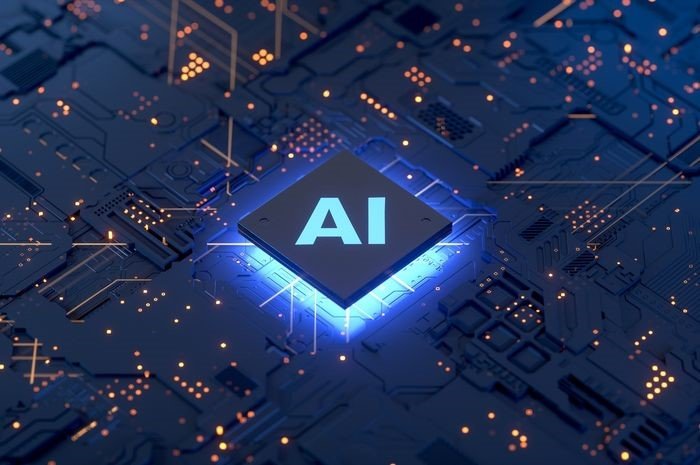
Which AI Components Are Copyright Protectable And Which Are Not? (source of picture: infokomputer.grid.id)
Although current copyright law does not explicitly state whether AI-generated works are copyrightable, Chinese courts have taken some initial positions by noting the differences between AI-generated works with and without human involvement, and in some cases, have recognized that AI-generated aspects with human intellect imprints may be protectable under certain conditions. For instance, the Nanshan District People’s Court in Shenzhen ruled in what was featured as “China’s first AI case”—Tencent v. Yingxun (2020)—that an article generated by Tencent’s team by using “Dreamwriter” software has a certain degree of originality, and the process of the generation shows the “intelligent creation” of Tencent’s team, and as such should be protected under the Chinese Copyright Law.
From a policy standpoint, this case undoubtedly sends signals to incentivize the AI business. For AI-generated components that do not require human intervention, on the other hand, e.g., any works generated by algorithms automatically evolved by AI through deep or machine learning, it remains to be seen how the copyright law will be developed to address copyrightability of such works. At least for the time being, certain Chinese courts continue to emphasize that natural humans must create and complete works in order for them to be copyrightable.
Many works utilizing AI will still benefit from copyright protection in practice if the principal author is still a human, but the degree of human involvement required for this in various jurisdictions is unclear. Further advancements in this area of law are expected, given the growing increase of AI-generated and AI-assisted works.
***Other Articles***
– You could see The trademark fee in EU and UK here.
– You could visit here to see Procedure of Trademark in European Union.
– You could visit here to check Required documents of filing trademark in European Union.
Contact AAA IPRIGHT: Email: [email protected]
Or sending your inquiry by filling the form: