Sound trademarks all over the world
Traditionally, sound was not consider an eligible element for trademark registration. Until recent changes and clarification in the WTO’s Agreement about Trade-Related IP Right did sound trademarks receive a pass.
Sound trademarks
The agreement mentioned above stated that any sign that is able tell goods and services from one manufacturer to another are good enough to be a trademarks. Sound trademarks make a powerful marks, to be honest. A good sound mark can be simple, but how to make it work is actually a complicated question.
Since trademarks are marks that are used to differentiate one’s goods and services to another’s, they have to be distinctive. That the first characteristic that makes a good sound mark design: distinctive. But there’s actually no definitive rule that regulate how distinctive a sound must be. Does sound have to be a complicated piece melody? Or does it only need to be distinct enough to make the customers relate to the brand?
Let’s compare two sounds: the 20th Century theme and the lion’s roar from Metro-Goldwyn-Mayer (MGM). The two sounds both work wonderfully at making the customer’s relate to the brand. However, while the 20th Century is a carefully composed piece of melody, MGM’s sound is simply a lion’s roar. Many other similar simplicity can be found in many other brand all over the world.
In fact, a good sound mark design should be associated with an existed mark. Take a look at the two examples again, the 20th Century melody remind us of the scene around a giant 20th, while the roar remind us of the MGM logo with a lion in the center.
Sound mark registration all over the world
Currently, sound trademark registration is legal in China, US, EU and Australia, which are the major markets already. However, each region has its own modification of the legal frame work when it comes to such registration.
The first sound mark successfully registered in China is from Tencent, back in 2018. Though only pass through regulation in 2014, which mean the sound mark system is quite young here, Tencent have made a successful registration in 2018. However, there nearly is no other successful applicants ever since. Some argued that Tencent’s successful application is due to its gigantic power in China.
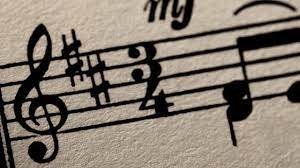
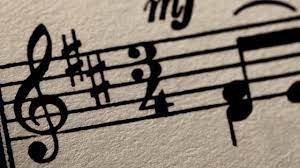
In EU, sound application comes in two types: digital audio and musical notation. Previously, sound marks need to be associated with a graphical representation, but this regulation was abolished in 2017. Sound marks can be filed in EU by either the representation through audio file or its representation in musical notation.
The US accepts sound registration by digital file from the very beginning. Famous sound marks in US can be Netflix sound mark, Intel mark, the MGM’s lion roar ot Tarzan’s jungle yell. Harley Davidson, a famous bike manufacturer has tried to obtain its right over unique engine sound, however this has serious legal encounters with Kawasaki and Honda.
Why sound mark registration has not been in other markets yet?
One way to put it is that there is nearly no worldly-known trademark from these regions. The reason that MGM’s lion roar, 20th Century is globally recognizable is indeed due to its fame all over the world. Their impacts to the global cinematic industry is just too huge to be ignored. However, the same does not apply to many companies that originated from markets that is not belong to those named above.
Another reason can be people’s perception of sound is different to each other. As mentioned above, there is no definitive regulation about how distinctive a sound must be. It can be referred that sound mark regulation can be similar to that of normal trademarks; however, while a same trademark can be registered to different classes of goods/services, this does not sound ideal to sound mark. Sound mark need to be associated to only one specific mark in order to show its true potential.
In the future, it is foreseen that sound marks shall be globally accepted, but currently sound marks is not in a good place due to its complication when it comes toe the regulations and rules.
Contact AAA IPRIGHT: Email: [email protected]
Or sending your inquiry by filling the form: