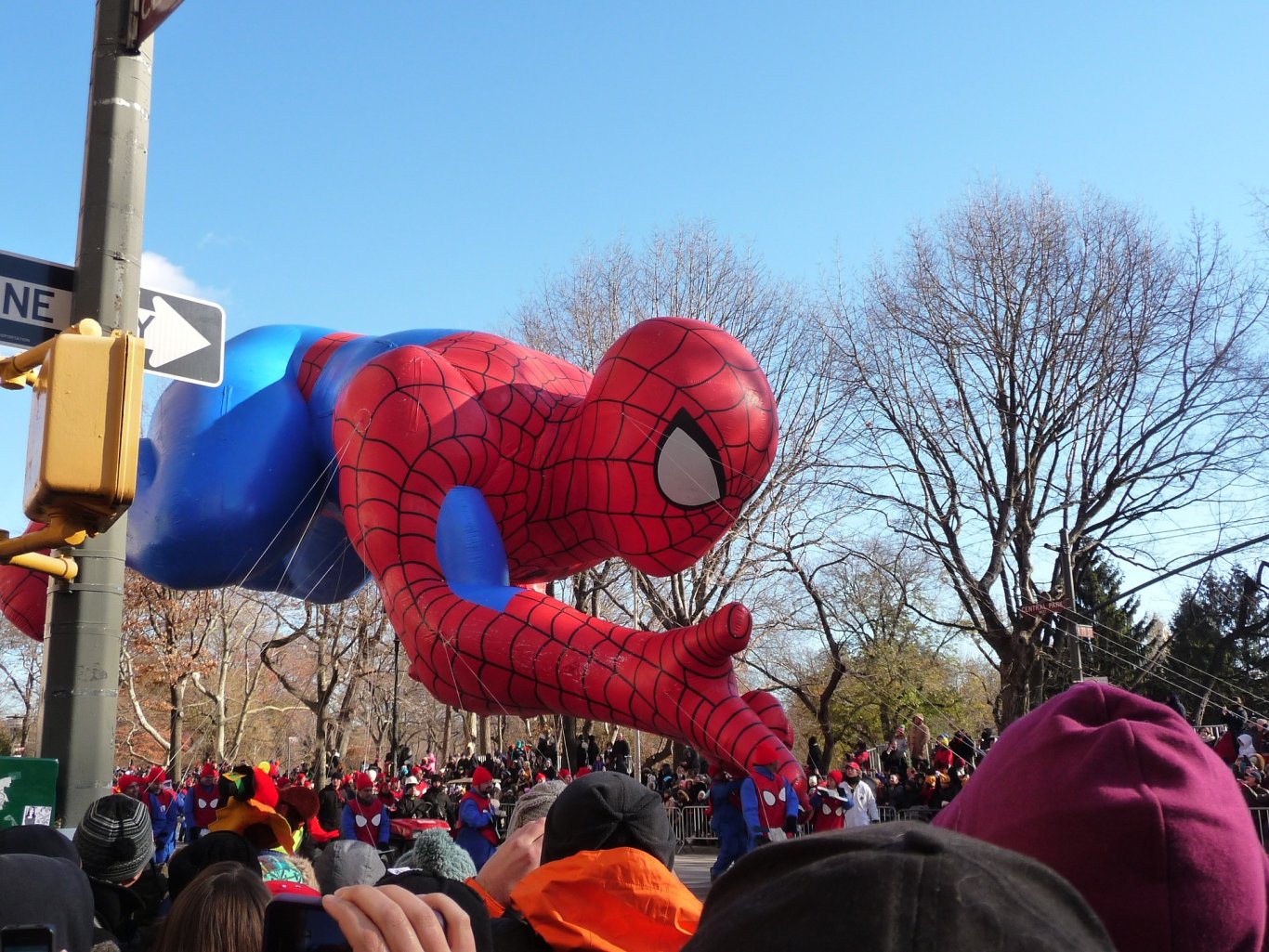
History of Spiderman rights dispute between Sony and Marvel
For movie nerds, or fans of the Marvel blockbuster cinematic universe, surely everyone will know about Spiderman movies with beautiful graphics and attracting millions of viewers from all over the world. However, not everyone knows about the copyright dispute over the Spider-Man character between Sony and Marvel. So, what is the cause of the dispute over the rights to this character?
Spider-Man character is also known to young people as Peter Parker, even to a certain number of readers – Miles Morales. However, in this article, we will only mention the character Peter Parker.
Peter was a shy schoolboy and lost his parents when he was 6 years old. His parents died in a horrible plane crash. After that, Peter was fortunate to be raised by his aunt May (Aunt May) and uncle Ben (Uncle Ben). While attending a scientific conference, Peter is accidentally bitten by a spider in the laboratory, experiencing strange changes to his body. After being in a coma, when he wakes up, he finds himself muscular and has extraordinary abilities. Thanks to this ability, he can use it to fight evil people or criminals, and help the weak but always keep his whereabouts, identities secret.
Spider-Man was first introduced in Amazing Fantasy vol 1 #15 in August 1962, under the delicate and sharp pen of two great writers: Steve Ditko and Stan Lee. The character Peter Parker, Spider-Man immediately blew a new wind in the comic book industry at that time. Over the years, Spider-Man has become the goose that lays golden eggs, reaping huge profits for Marvel Comics, and becoming one of the most popular and beloved superheroes of all time.
Especially in the period when the cinema and television industry was still underdeveloped, with Spider-Man alone, Marvel has reaped a huge source of revenue. However, after that, the situation began to show signs of change. Specifically, at the time when the Marvel company was on the verge of bankruptcy, the major editors were running after Spider-man’s long-term project, The Clone Saga. The series ran from 1994 to 1996, right during Marvel’s worst economic times.
After being unable to pay huge debts, Marvel decided to sell the rights to make Spider-Man movies to Sony. After that, this Spiderman character was created by the Sony studio for young audiences until now.
Spider-Man is officially on the big screen
With the direction of Sam Raimi and young actor Tobey Maguire as the lead Peter Parker, Spider-Man was released in 2002 and reaped glorious achievements after more than 25 years of stagnation. Thanks to its faithfulness to the original, along with the critically acclaimed performance and soundtrack, Spider-Man 2002 has become the “brilliant” work of the superhero movie genre of the early 2000s.
After only a week of release, the series crossed the $100 million mark and became the 6th highest-grossing film in history at that time. The image of Spider-Man played by Tobey Maguire has become the template for all subsequent Spider-Man works. Following the success of Spider-Man, authors Sam Raimi and Tobey Maguire continued to collaborate to release Spider-Man 2 (2004) and Spider-Man 3 (2007). Both brought Sony great commercial success.
Although the three Spider-Man 3 movies have all achieved great success and received positive feedback from viewers, while in the process of producing part 4, director Sam Raimi faced difficulties due to dissatisfaction with the script proposed by Sony. Finally, after realizing that he could not release part 4 in 2011 as planned by Sony, Sam Raimi decided to leave the director’s chair. Instead of finding another director, Sony planned to reboot with a new series of Spider-Man films, starring Andrew Garfield and directed by Marc Webb.
Released just 5 years after Spider-Man 3, it seemed that The Amazing Spider-Man – the new version of Spider-Man would struggle to escape from his predecessor’s too-large shadow, however, the truth proved the opposite. The Amazing Spider-Man 2012 not only received many compliments for its eye-catching action sequences, acting, and directing like the previous series, but even Andrew Garfield’s version of spiderman was rated as “more realistic” than Tobey Maguire’s version.
Following the success of the first part, The Amazing Spider-Man 2 was quickly produced and released in 2014. However, like Sam Raimi’s Spider-Man 3 before, The Amazing Spider-Man 2 received much negative feedback due to too many villains, disturbing the film flow. In addition, the revenue of The Amazing Spider-Man 2 also reached the lowest level compared to all previous Spider-Man films, causing the big Sony to gradually abandon the production plan for part 3.
Agreement between Sony and Marvel
After the unexpected delay after The Amazing Spider-Man 2, Sony began to consider the next options for the character Spider-Man. One of them is bringing back director Sam Raimi to helm a new version of Spider-Man. However, this plan was canceled because of an agreement between Sony and Disney – the company that owns Marvel Studios. Recognizing the success of the Marvel cinematic universe (MCU), since 2016, Sony has approved allowing Spider-Man to join this cinematic universe and released a version of Spider-Man played by Tom Holland, in which there are many twisty clauses – which create a stir in the world about the dispute over rights between Marvel and Sony.
Specifically, the two sides have reached an agreement that Disney will receive 5% of the revenue for each Spider-Man movie produced by Sony and Marvel Studios, while team-up movies like Avengers will be 100%. In addition, Disney is also allowed to collect all other profits besides box office money such as toys, spin-offs, and advertising revenue of brands – a source of revenue that is said to be increadibly huge.
Thanks to that, Tom Holland’s Spider-Man has brought huge profits for Sony. Their exploitation of Spider-Man also had many changes when Spider-Man PS4 succeeded in the game market and the animated film Spider-Man: Into The Spider-Verse brought them a prestigious Oscar.
However, recently, the conflict has erupted again, and it is very likely that Spider-Man will have to leave the MCU. This is because both Disney and Sony could not reach mutual agreements after a series of successes in the past.
According to sources, this split happened because of money problems. Disney wants to make a new deal, with a requirement to split the profits equally between the two studios 50/50. However, Sony declined and offered to give another number, intending to keep the original terms. Of course, that number did not satisfy Disney and both sides have yet to show signs of returning to the negotiating table.
If these contradictions continue, it is expected that Tom Holland’s new trilogy in the upcoming Spider-Man 4, 5, and 6 movies may be delayed indefinitely, even cut off like with Spiderman 3 in 2007 and The Amazing Spider-Man 2 in 2014.
Will Spider-Man: No Way Home (2021) be the last we see Spider-Man Tom Holland? No one can know the future but it is certain that if this happens, audiences around the world will be in for a great shock as they will no longer see Tom Holland in his spider suit.
***Other Articles***
– You could check Required documents of filing trademark in USA here.
– You could see What needs to be done after registering a trademark in US? here.
– You could visit here to see What is use in commerce of filing trademark in USA.
– You could also check here to see Procedure of Trademark in USA.
Contact AAA IPRIGHT: Email: [email protected]
Or sending your inquiry by filling the form: